20 Free Pieces Of Advice For Picking Floor Installation
Wiki Article
Nail Down Vs. Glue Down. Floating Hardwood Explained
Ask three different flooring contractors in Philadelphia what the proper way for hardwood to be put in and you'll get three different answers - not because any of them are incorrect, but due to the fact that the correct installation method genuinely depends on specific factors to your house. The subfloor type, flooring level, the wood species, your moisture needs and your long-term vision for the space all factor into the final decision. A majority of homeowners only realize this later so you should know the distinctions before you begin getting estimates. Let's look at how each one actually operates and when each can be considered a good idea.
1. Nail-Down Is the Traditional Standard for Solid Hardwood
Nail-down installation -- sometimes called staple-down, involves fixing each plank of hardwood on a wood subfloor by using an pneumatic nailer. It's the earliest method and is still the preferred technique for solid hardwood installation in Philadelphia houses with boards or OSB subfloors. The bond is sturdy, the floor is solid underfoot and there's no adhesive to fail over time. Most flooring contractors will default in nailing down for solid hardwood over subfloors made of above-grade wood without a second thought.
2. Your subfloor can determine if nailing down is a viable option at all.
Wood flooring that nails down hardwood needs a wooden subfloorthat is a complete stop. Concrete slabs, as seen in basements as well, as in some ground floor sections of Philadelphia homes and Delaware County ranches, cannot accept staples, nails or nails in any way. If your subfloor is constructed of concrete, nail-down is off the table regardless of what flooring material you'd like. A licensed flooring installer will spot this issue immediately on a tour of the site. However, an untrained one might not know until the project has started.
3. Glue-Down Releases Concrete Slab Installations
The glue-down hardwood installation employs an adhesive with a full spread applied to the subfloor prior to planks being put in place. It's the preferred method when you want real hardwood over concrete. Basements are a common option in Montgomery County colonials, ground-floor slabs in contemporary South Jersey construction, or the space in which nail-down isn't practical. If it's done right, a glue down floor is extremely rigid and offers a low amount of flex. However, removal from the floor is considerably more time-consuming that removing a stapled or floating floor.
4. The floating Hardwood Doesn't Link to the Subfloor at all
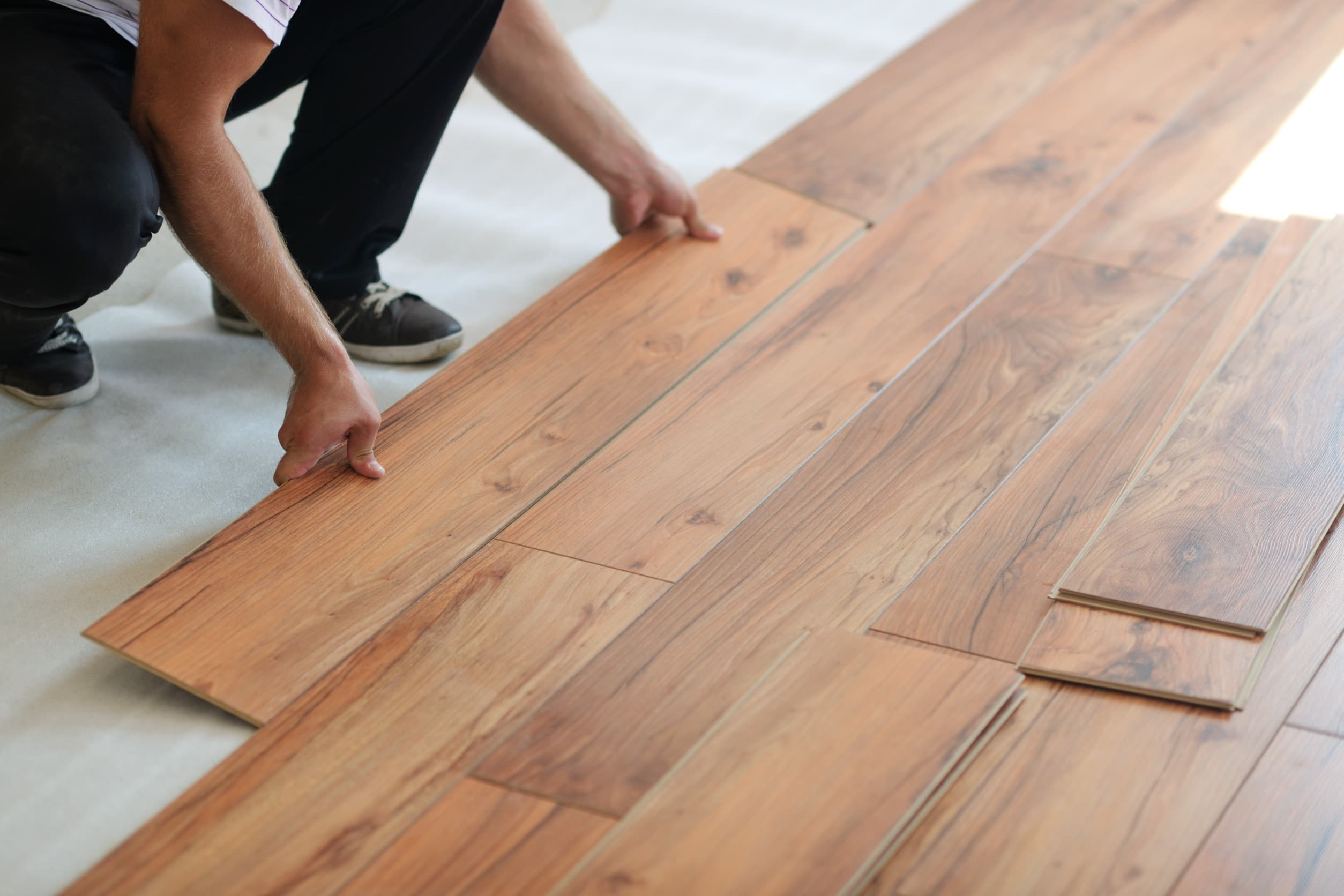
Floating installation signifies that the planks are locked at their edges. They sit on top of the subfloor like one single surface that is moving as a whole instead of being fixed. It's quicker to put in, more easy to remove, and more durable to scratches on the floor than nail-down. Engineered hardwood is the most common candidate for floating installation in Philadelphia due to its layers. Its construction can handle the slight movement that is associated with a floating better than solid wood does.
5. Floating floors give you a distinctive sensation underfoot
The showroom experience aren't always able to convey. A floating hardwood floor has a slight vibration when you walk over it. It's not overwhelming however, it is noticeable in comparison to nails-down floors, which are secured straight to the subfloor. It's for most homeowners a minor issue. For some, especially those upgrading from old nails-down hardwoods, it's an adjustment. If you are concerned think about it, ask your flooring professional for an unfinished floor prior to taking the plunge.
6. Nail-Down has the highest labor Prices of the three
From a simple installation point of view nailing down hardwood requires more time and effort this is evident in those labor quotes you'll receive from Philadelphia flooring contractors. The subfloor must be spotless, flat, and properly thick. It is essential to acclimatize the planks. The nailer requires careful technique in order to avoid splitting. Flooring installers who nail down well earn a good profit. If you find a cheap hardwood installation quote, it's worth asking specifically what they're going to do to fix it.
7. Glue Down increases material costs but can save on some labor Variables
Adhesive can be expensive, and glue-down jobs require the correct material that's suitable for the subfloor and hardwood combination. However, installing glue-down over a concrete slab that has been properly prepared will be faster than nailing to a subfloor that needs major repairs. Flooring contractors in Bucks County and Delaware County generally recommend glue-down on engineered hardwood for slab-on-grade homes specifically, because it is a way to combine authentic wood looks with practical benefits.
8. The Moisture Test should be performed prior to any Method is selected.
This step is usually skipped when doing budget jobs and creates problems in the course of a year. Concrete slabs produce vapors of moisture in excess, and this can cause glue-down adhesives as floating floorings break. Wood subfloors in older Philadelphia rowhomes can carry an elevated level of moisture from crawlspaces, or poor ventilation. An accurate moisture measurement prior installation isn't something you can do without -that's how an experienced flooring contractor determines which method is secure and what preparation needs to be completed prior.
9. Refinishing Compatibility varies based on Method
Nail-down solid hardwood is typically able to be sanded and finished multiple times over its lifespan- it's one of strong arguments to consider over other hardwoods, even if it comes with a higher costs of installation. Glue-down engineered hardwood can usually be refinished twice or once depending on the wear layer thickness. Floating engineered flooring may be less refinishable. If long-term wood floor restoration is one of your goals then consider this into the procedure before installation, not after.
10. It's best to use a Site Decision, Not a Preference The Right Method is a Site Decision, Not a Preference
The homeowners who attend flooring consultations with an idea of which method they'd like. Expert flooring installers in Philadelphia are able to gently redirect that conversation towards the method that your home's design actually enables. The most skilled flooring installers aren't trying to promote a particular technique -they're studying the subfloor, your moisture levels at your floor, and the species of wood you have and making recommendations accordingly. This specific site-specific evaluation is what distinguishes an authorized professional from someone who owns nailers. Follow the best
hardwood floor installation Bucks County for blog recommendations including laminate floor contractors Philadelphia, hardwood flooring Philadelphia, flooring installation near me Philadelphia, glue down hardwood flooring Philadelphia, luxury vinyl flooring Philadelphia, flooring contractors Montgomery County PA, hardwood floor installation cost Philadelphia, floor installation Delaware County PA, cheap flooring installation Philadelphia, luxury vinyl plank installation Philadelphia and more.
Hardwood Refinishing Vs. Replacement: What's The Right Decision?
In Philadelphia homes bear a rich history within their design -- the original wood strip flooring from a Germantown twin and broad pine planks found in a Chestnut Hill Colonial, decades-old hardwood flooring in the Delaware County ranch that's seen three families. When floors become rough, the instinct is typically and often to change them. But replacing isn't always the wise choice and refinishing doesn't necessarily mean that it's the least expensive option the way it appears on the surface. The choice between sanding and renovating the existing hardwood versus pulling the floor and refinishing it is dependent on factors that are apparent once someone who is aware of what's on the table actually walks through the floor. The following steps will help you think through the options before committing to either of the options.
1. Floor Thickness Is the First Aspect That Will Determine Your Options
Solid hardwood may be sanded as well as renewed several times during its lifetime -- but not indefinitely. Each refinishing operation removes thin layer of wood and once the floor is taken away close to tongue-andgroove fixing system beneath and it's no longer able to be sanded again with safety. Most solid wood starts at the thickness of 3/4 inch, with 1/4 inch of material above the tongue that can be used for sanding. A flooring specialist can measure remaining thickness with measuring instruments in a discreet place -- and the measurement, much more so than other indicators, decides the status of refinishing being considered.
2. Engineered Hardwood It has a narrower, more refined refinishing Window
Engineered hardwood installation has expanded exponentially across Philadelphia, Bucks County, and Montgomery County homes over the more than two decades. most homeowners don't even realize the flooring is engineered until the need to refinish comes up. The actual wood veneer layer that is present on engineered flooring is less than solid - anywhere between 1mm-6mm, depending on the product -- this limits the number of times it's able to be cleaned. Thin-veneer engineered timber may just be able to take one careful finishing pass or not at all. Knowing what you've got before accepting that refinishing can be done is a way to avoid the time and effort of a visit to estimate.
3. Refinishing will cost significantly less than Replacement in Most Cases
Refinishing and sanding floors in Philadelphia typically costs between $3 and $3 per square ft. Full hardwood floor replacement -removal of the flooring, assessing subfloors, new material and installation will cost you between $10 and $20 per square foot, or more based on the species and method. For a 500-square-foot area, the cost is between the $1500 to $3,000 range and a $5,000 to $10,000 one. If the floor that is in use has enough thickness and has no structural issues, it can be refinished to provide much of the visual appeal of brand new floors for only a fraction of the cost.
4. Surface Damage on its Own Is No Reason to Replace
Scratches, scuffs small stainings, surface-level discoloration are precisely the things floor sanding is designed to deal with. These conditions look worse than they really are. A properly sanded pass takes away any damaged surface layer and brings the floor back in its natural state, that point, custom staining along with finishing bring back its original appearance. Philadelphia homeowners who decide to replace floors with damaged surfaces that they could have repaired are making a costly purchase based on their aesthetics, not structural reality.
5. Structural Damage Can Change the Calculation Entirely
Cupping, warping and major damaged by water that has reached below the surface, rot at the board the level or flooring with significant loose or missing sections are distinct from surfaces that wear. Refinishing takes care of surface conditionsand it's not able to fix any board that has moved by way of moisture neither can it repair a floor in which the subfloor underneath has failed. When structural issues are present or if structural damage is evident, the most honest recommendation from an experienced flooring contractor could be that replacement is the only option to ensure that the floor performs correctly rather than just look better for a while.
6. The previous history of refinishing has an effect on the Decision Currently Made
A floor made of hardwood that has had to be refinished three or four times over it's lifespan may have minimal remaining material over the tongue, regardless of how thick it was when it began. Contrarily, original hardwood in the interior of a Philadelphia house that's never been restored -- which is less common than we think in older buildings -- may have considerable remaining thickness even if it looks rough. The appearance of the floor isn't a reliable indicator of its refinishing potential. Measurement of the floor and, in some instances taking a floor vent to check a cross-section are what professionals use to decide the remaining floor.
7. Custom staining in Refinishing is a great way to alter the appearance of floors
Refinishing's unappreciated benefit is the possibility to alter the floor's color entirely. Custom hardwood staining in Philadelphia is a crucial part of refinishing process -- once the floor has been sanded back to its original hardwood, a stain can be applied prior to the finish coats get dripped down. Homeowners who have lived with a hardwood that was orange-toned for a long time are often shocked to find that the same wood could change to a cool grey, a rich walnut, or a warm natural depending upon the species used and the type of stain chosen. There is no need to replace them in order to change the look dramatically.
8. Assembling new Hardwood to Existing Floors Is Harder Than You Think.
One circumstance that forces homeowners toward a full-on replacement of their flooring is when there is a single area that is in need of attention, the area that is damaged by water, an addition, a room which was carpeted previously. Making new hardwood match existing older hardwood in other rooms of the home is an extremely challenging task. Wood species, cuts patterns, grain patterns and years of patina do not replicate exactly when you replace the material. Flooring contractors across Delaware County and South Jersey who are honest about this will advise that a complete restoration of the entire floor after patching is typically the only way to ensure visually consistent.
9. Replacement opens the doors to completely upgrading the material
Sometimes, the only option can be replacement, not simply since refinishing would be impossible, but because the existing floor isn't worth preserving. Low-grade softwood that dents easily floorings with substantial subfloor issues that need addressing without delay, or even homes where the layout has changed, and the old floor no longer is logical this is an instance where replacing the floor can provide a significant upgrade. Switching from worn softwood to white oak hardwood, or switching from damaged solid hardwood and engineered hardwood more suited for your home's humidity conditions, is a distinct option from replacing a wood floor that has been refinished.
10. Do the assessment before you Make a Decision, Not Once You've Choosen
Refinish or. replace choice should be made after an expert has examined the floor, not prior. Most reputable flooring contractors in Philadelphia provide free estimates including this type assessment: measurement of floor thickness, identification of structural surface vs. surface damage, moisture analysis, and an definition of the steps each is in terms of price along with the timeline and end result. Customers who ask for a replacement quote usually have already talked themselves into refinishing a flooring option they've not fully explored. The assessment is free. The replacement, if it happens to be ineffective it isn't. See the top rated Have a look at the recommended flooring contractors Montgomery County PA for blog tips including hardwood floor refinishing cost Philadelphia, nail down hardwood flooring Philadelphia, tile flooring contractors Philadelphia PA, kitchen tile flooring Philadelphia, flooring contractors Bucks County, laminate flooring installation Philadelphia PA, flooring contractors Philadelphia PA, hardwood floor refinishing cost Philadelphia, hardwood floor refinishing cost Philadelphia, floor installation Delaware County PA and more.
